
Unannounced Israeli jets near the Turkish border could easily have triggered a clash, in a high-stakes ‘warning’ to Ankara
Fears of a military confrontation between Israel and Turkey are growing after Israeli Prime Minister Benjamin Netanyahu sought to assert dominance over Syria by ordering air strikes on a military airfield near the Turkish border.
The eight strikes on the Abu Al-Duhur airbase in northwest Idlib province on Tuesday were characterised by Netanyahu as a warning to Turkey against expanding its military presence in Syria or helping rebuild the Syrian armed forces.
Do you have questions about the biggest topics and trends from around the world? Get the answers with SCMP Knowledge, our new platform of curated content with explainers, FAQs, analyses and infographics brought to you by our award-winning team.
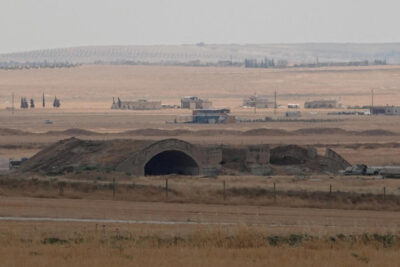
“Israel repeatedly warned Syria that such a deployment would pose a threat to Israel’s security. Syria chose to ignore these warnings,” Netanyahu’s office said in a statement issued on Tuesday evening.
The following day, the Israeli leader reframed the strikes as a “message” that he would not tolerate a Turkish military entrenchment in Syria that “advances southward, because it threatens us”.
His comments followed a rare expression of “deep concern” from Washington at Israel’s “unnecessary escalation”.
Because Israel gave no advance notice, the sudden appearance of its fighter jets on Turkish air-defence radars near the border could easily have triggered a clash.
Tom Barrack, the US special envoy for Syria and Iraq and ambassador to Turkey, said the Turkish military – the second-largest in Nato – “observed the aircraft heading north towards its territory and therefore could have reasonably prepared its own response.”
In 2015, Turkey shot down a Russian fighter jet under similar circumstances after it appeared to threaten an intrusion from Syrian airspace.
Observers echoed Barrack’s assessment in reactions posted on social media.
Turkey and Israel “may have no intention to get into a kinetic confrontation, but they could easily slide into one. Accidentally. Suddenly,” said Asli Aydintasbas, a Middle East fellow at the Brookings Institution. “This is why [Tuesday’s] incident was dangerous.”
“The [Syrian] government has neither adopted a predatory posture nor maintained proxy forces,” Barrack said in an earlier social media post. “It has, in fact, repeatedly indicated a preference for de-escalation with Israel”.
Spheres of influence
Turkey has operated scores of military facilities across northwest Syria since intervening in the country’s civil war in October 2017.
But after rebels led by current President Ahmed al-Sharaa toppled the Assad government in December 2024, Turkish forces have not expanded their geographical footprint, according to observers.
Ankara briefly explored deploying forces to an airbase in central Syria soon after the takeover, but backed down after Israeli strikes hit the facility in March and April 2025, following visits by Turkish military delegations.
This incident established an informal status quo: Israel, which occupied part of southwest Syria soon after Assad’s fall, retained “freedom of action” over the southern half of the country, while the north became Turkey’s sphere of influence.
By striking Abu Al-Duhur on Tuesday, Netanyahu was now “asserting an Israeli security zone that stretches to the Turkish-Syrian border”, said Rich Outzen, a non-resident senior fellow with the Atlantic Council’s Turkey programme, who called the move “not wise”.
Analysts who spoke to This Week In Asia viewed the strikes as an ominous sign of things to come between Israel and Turkey.
Nir T. Boms, a counterterrorism expert and research fellow at Tel Aviv University’s Moshe Dayan Centre, said the incident had raised the risk of confrontation, though he thought “there is a long way to go” before one erupted.
“This is signalling to Damascus which, of course, is related to the growing Turkish role in shaping Syria’s military,” Boms said, adding that Israel was “concerned about this direction”, especially given the “track record of Turkish support for groups that have taken a very brazen line against Israel”.
Shaiel Ben-Ephraim, an Israeli-American geopolitical analyst and outspoken critic of the Netanyahu administration, expressed a similar view – saying that while Tuesday’s air strikes had increased the odds of an inadvertent confrontation with Turkey, “I don’t think that Israel wants a full-out war right now”.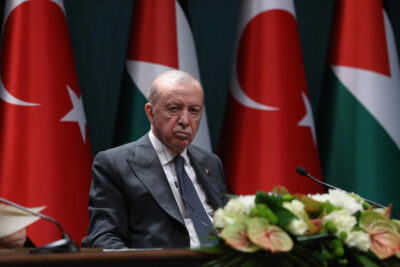
He saw Netanyahu’s decision to escalate tensions partly as a political manoeuvre meant to rally right-wing support ahead of October’s general election.
“The typical use of security is to frighten voters into voting for the right,” said Ben-Ephraim, who is a senior analyst with strategic advisory firm Atlas Global Strategies.
Still, he warned of a “genuine risk” that miscalculation could trigger a wider confrontation, because “there are no clear borders for Turkish or Israeli influence in Syria and for Turkey this seems to be a primary interest”.
Giorgio Cafiero, CEO of the Washington-based risk consultancy Gulf State Analytics, said tensions between Turkey and Israel had been rising for years, “particularly since Ankara began filling a major vacuum in Syria” after Assad’s ousting in late 2024.
The latest strikes, within 45 miles (72km) of the Turkish border, “constitute a troubling development” because they showed that Israel “does not want to see Syria, under any leadership, rebuild itself militarily”, he said.
Such a scenario risked undermining Israel’s “vision for total dominance over the region”, Cafiero added, pushing the Netanyahu government to do “anything within its means to prevent any actor in the neighbourhood from challenging Israeli hegemony”.
So far, Turkish President Recep Tayyip Erdogan has responded with relative restraint, rejecting Netanyahu’s claims of a military build-up as “untenable” on Wednesday, saying they “stem from Netanyahu’s intent to pursue expansionist and destabilising policies in the region ahead of the elections in Israel”.
But with Netanyahu’s leading rivals sharing his concerns about Turkey, analysts doubt a change of Israeli leadership would soften Israel’s approach towards Ankara.
“Most importantly”, the Israeli Defence Forces (IDF) were “hard-wired to solve every problem with military force and there is no counter, no diplomatic approach, to rein them in”, Ben-Ephraim said.
The Israeli foreign ministry had long ceased to counterbalance the IDF in any meaningful way and the concept of deterrence had “completely given way to pre-emption”, he said.
Ben-Ephraim expects “a long, tense confrontation between Turkey and Israel as Turkish ambitions increase while US power wanes” in the Middle East, Israel “grows more isolated” and Iran rebuilds.
Boms, by contrast hopes “a real change” in the Israeli government could “open a new slate” for different relationships across the region, Turkey included.
“But it takes two to tango and it does not seem that Erdogan is in a dancing mood,” he said.
South China Morning Post Publishers Ltd